
Fragrances
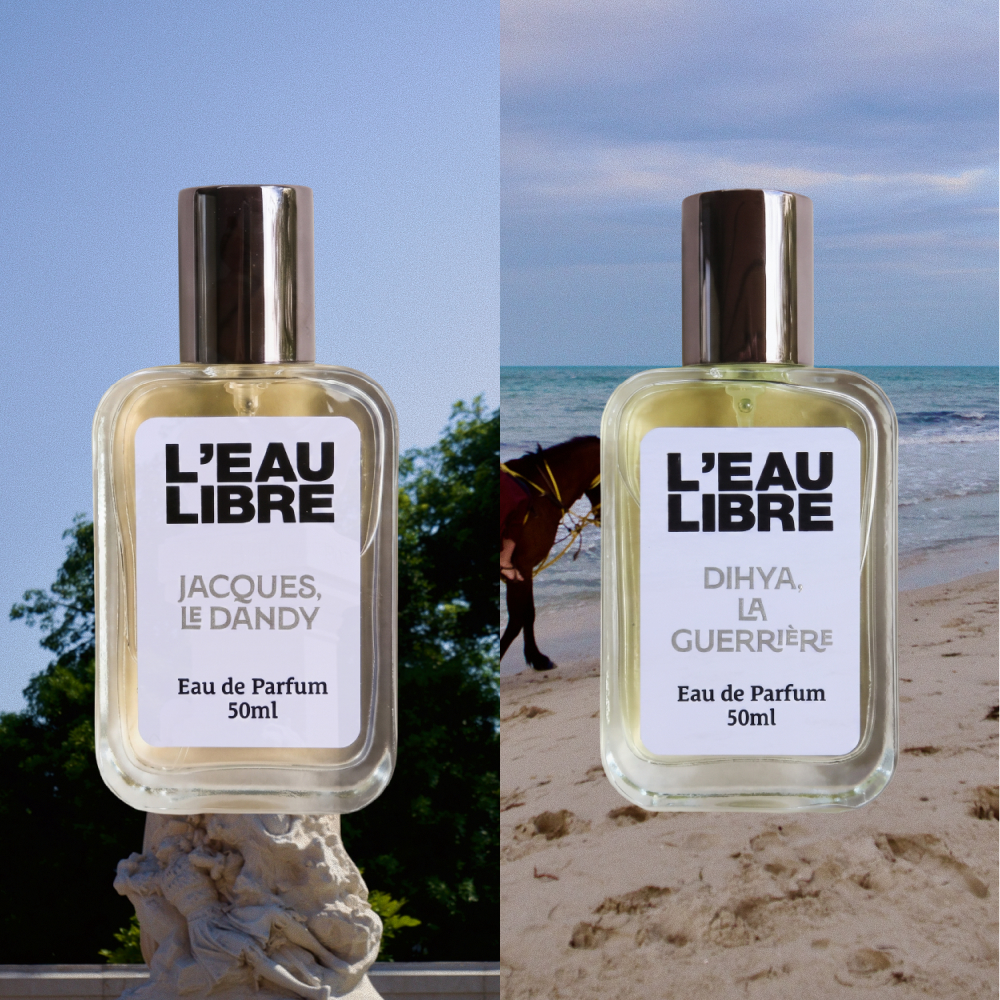
L’Eau Libre’s debut collection is about Jacques and Dihya, and the many genders and complexities of otherness they embody. Our masculine portrait is an homage to the lifestyle of the dandy. A vain meditation on how to carry oneself as a man. Our feminine portrait is an ode to the relentless stamina of women who lead.
One could also read the complex layers of colonialism and patriarchal oppression through the pairing of a man and woman on opposing sides of the Mediterranean Sea. Is this the ironic beauty of grappling with contemporary hegemonies? In rebelling, are you campaigning for a new reality, or merely unmasking an inescapable hypocrisy?
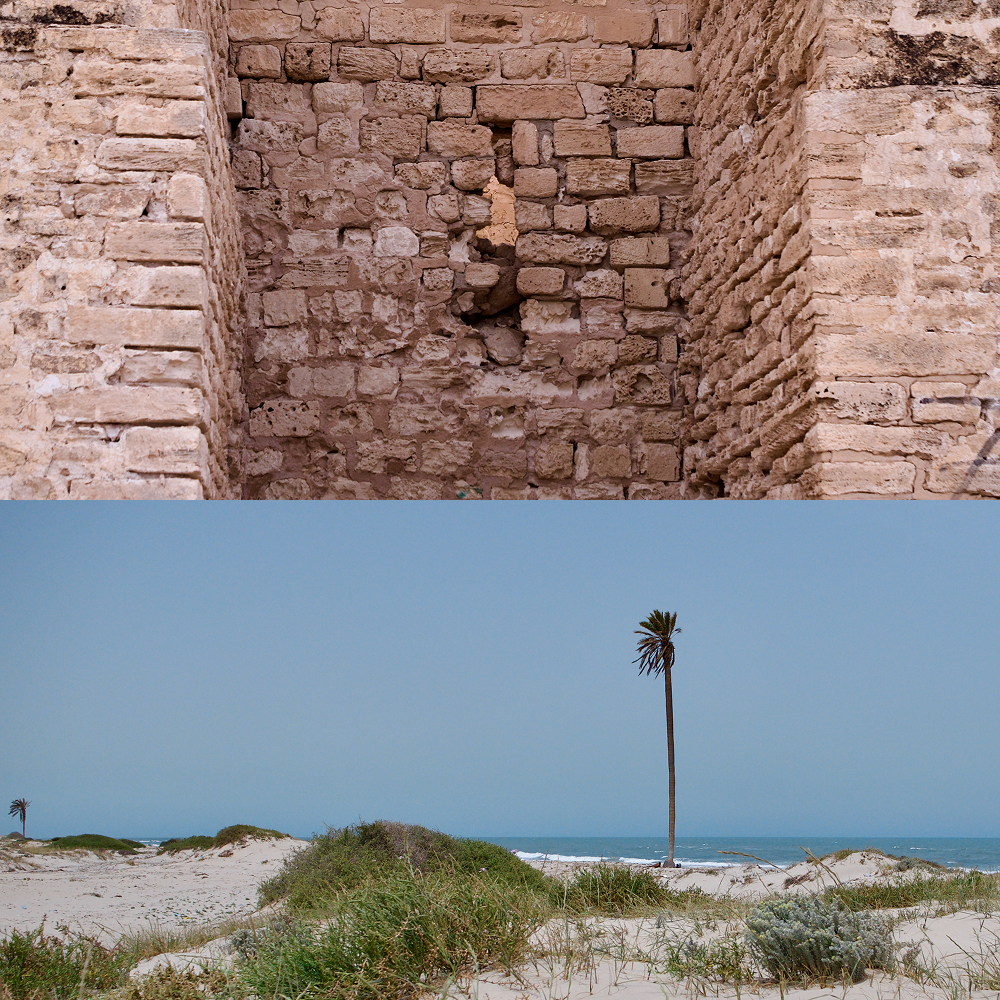
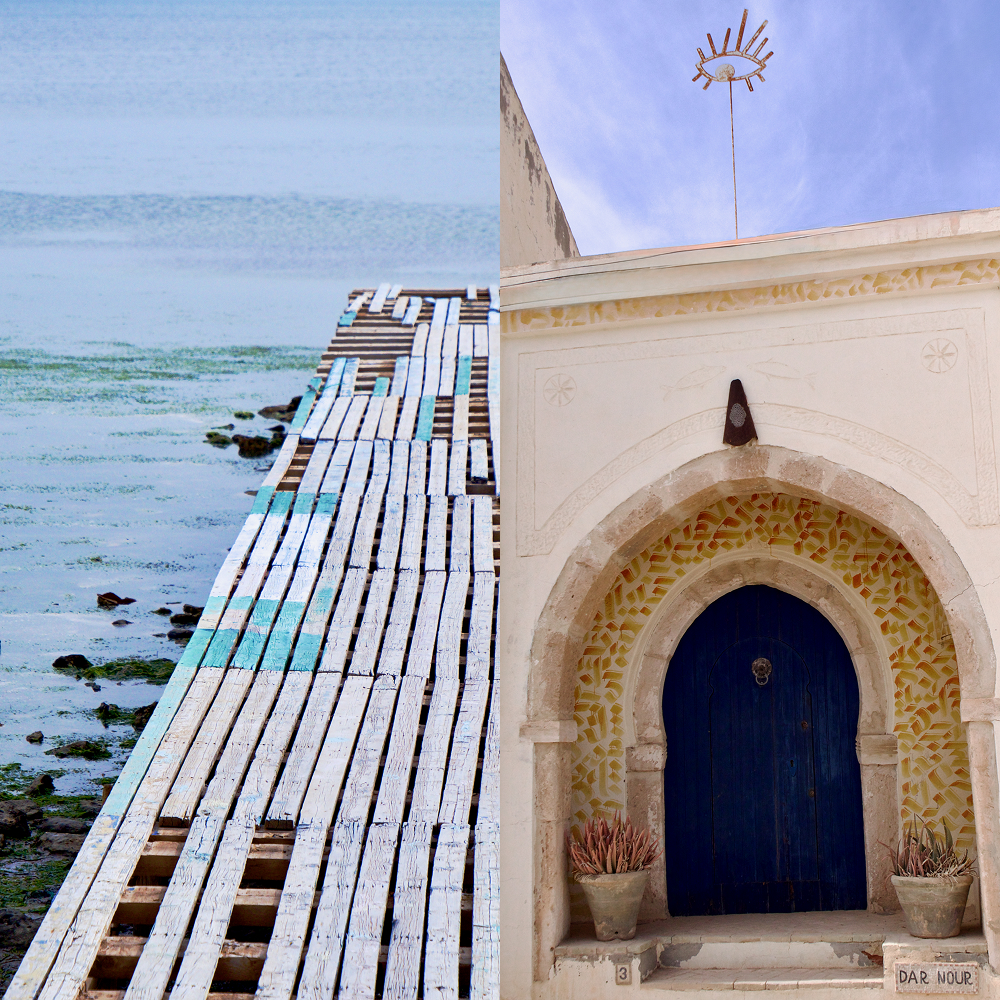
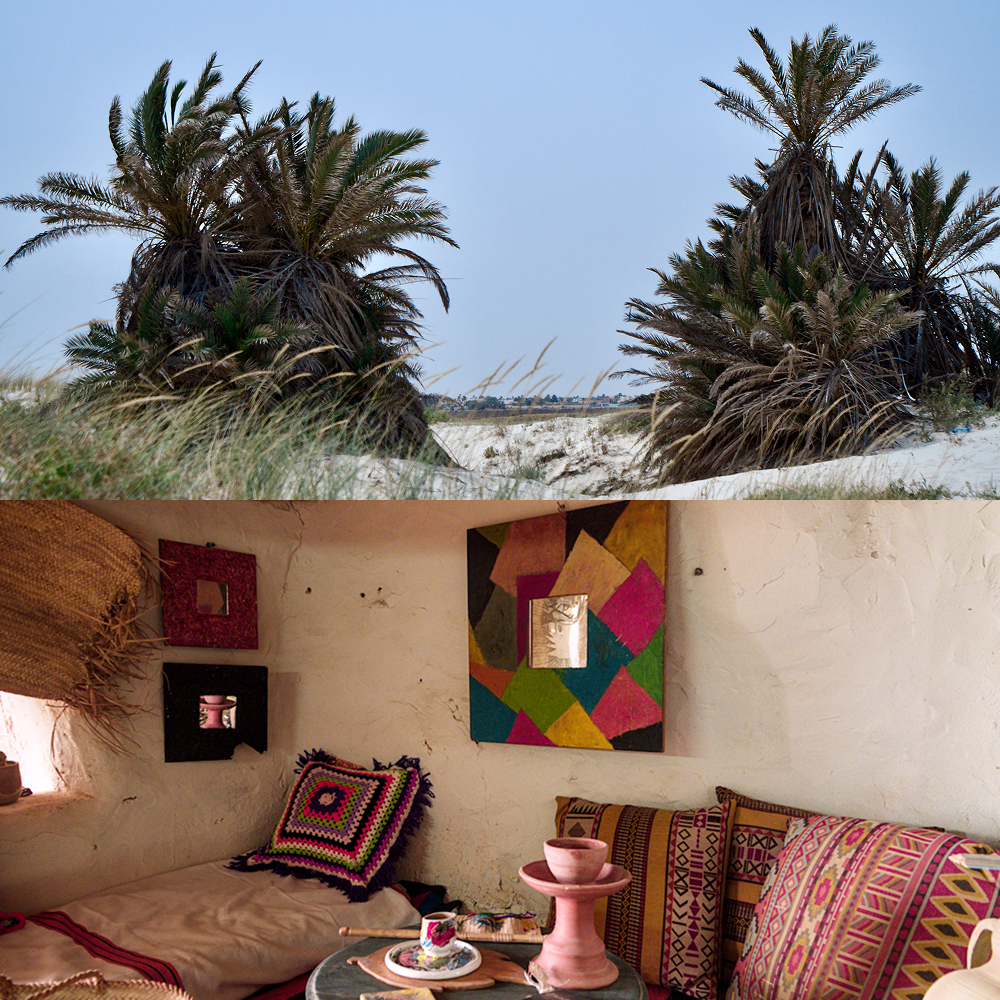
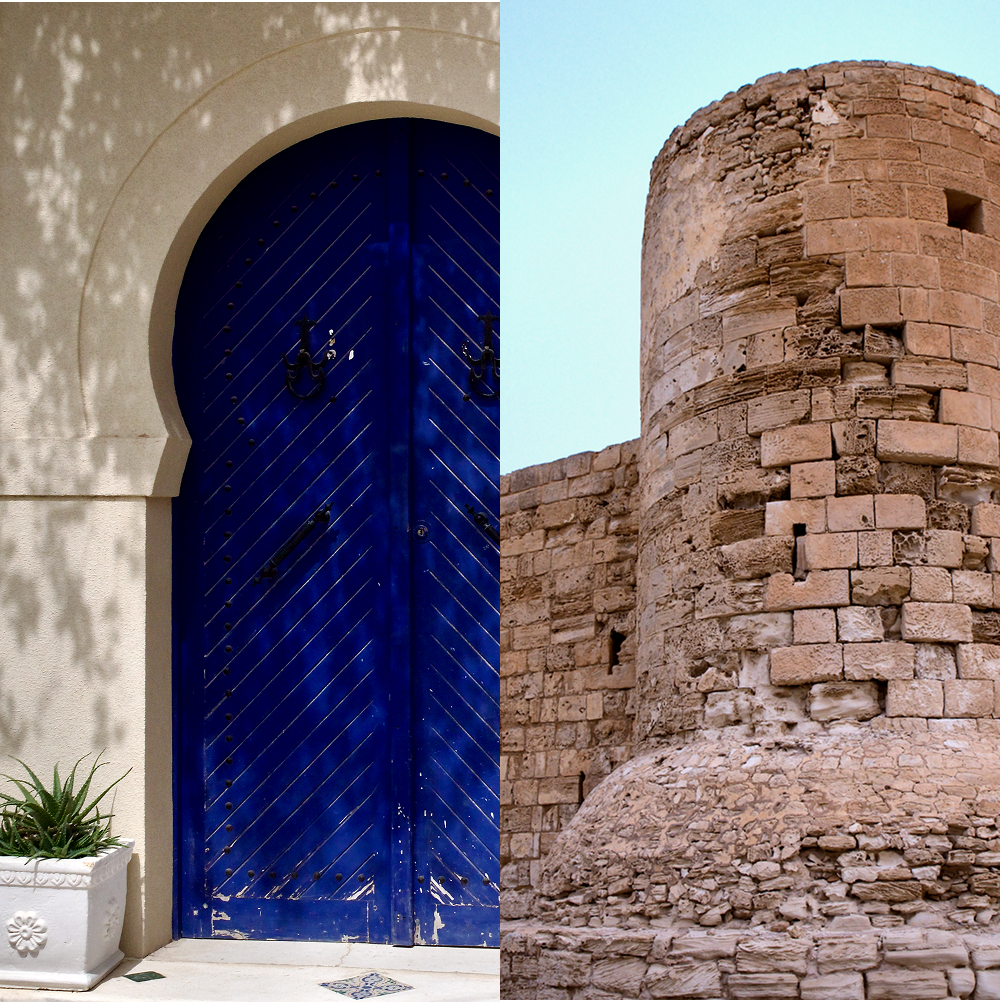

Scroll to the right
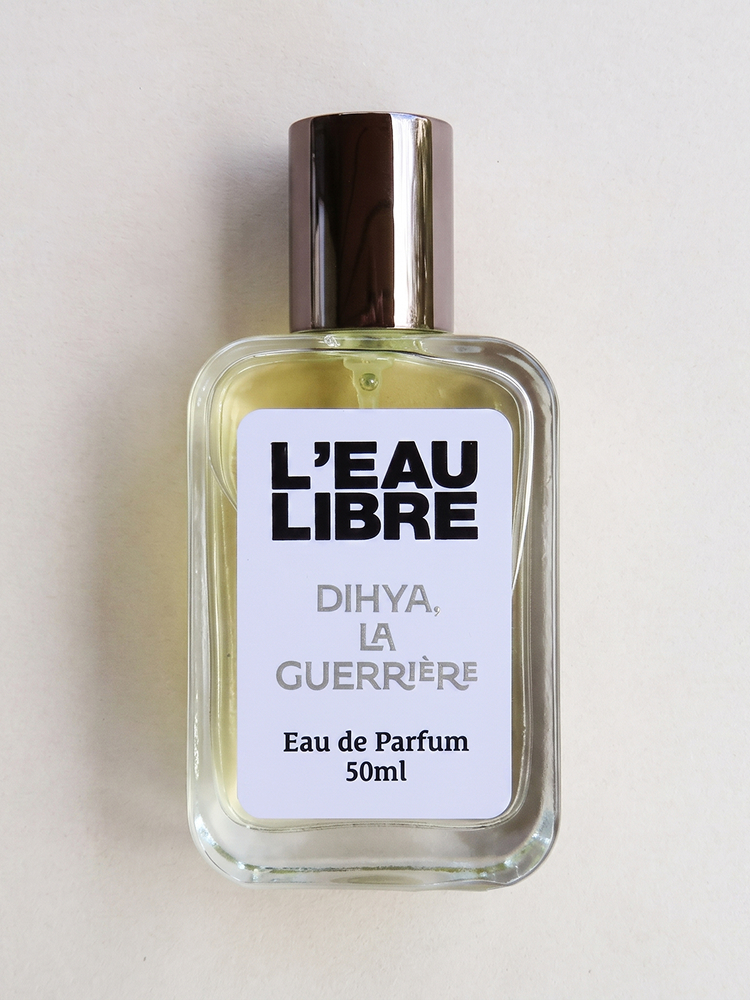
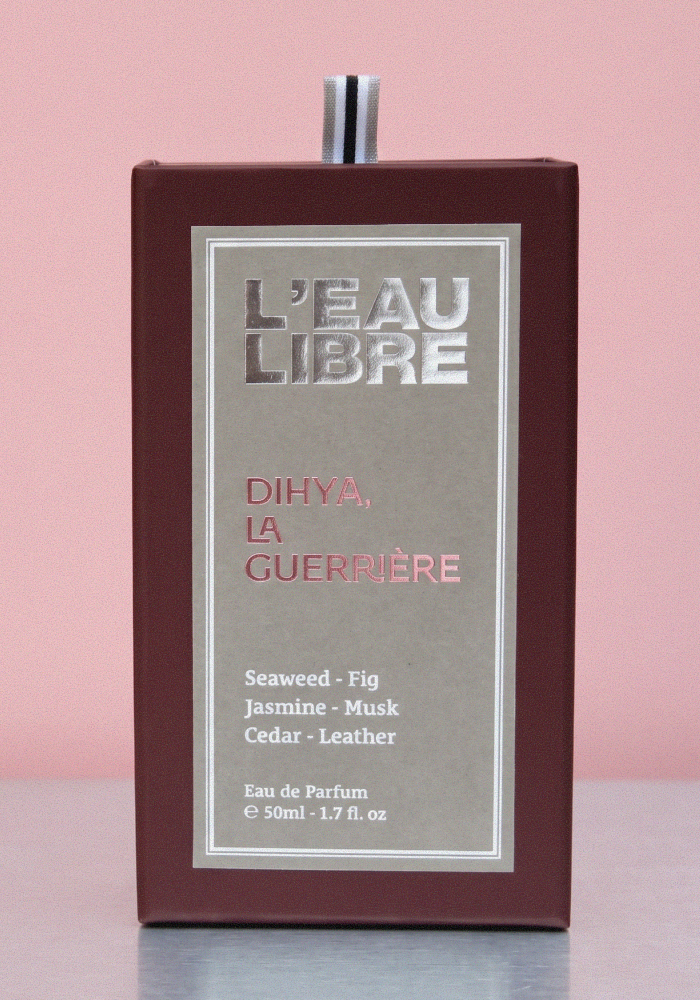
Dihya, La Guerrière
Unbottles: Independence, foresight, and tenacity
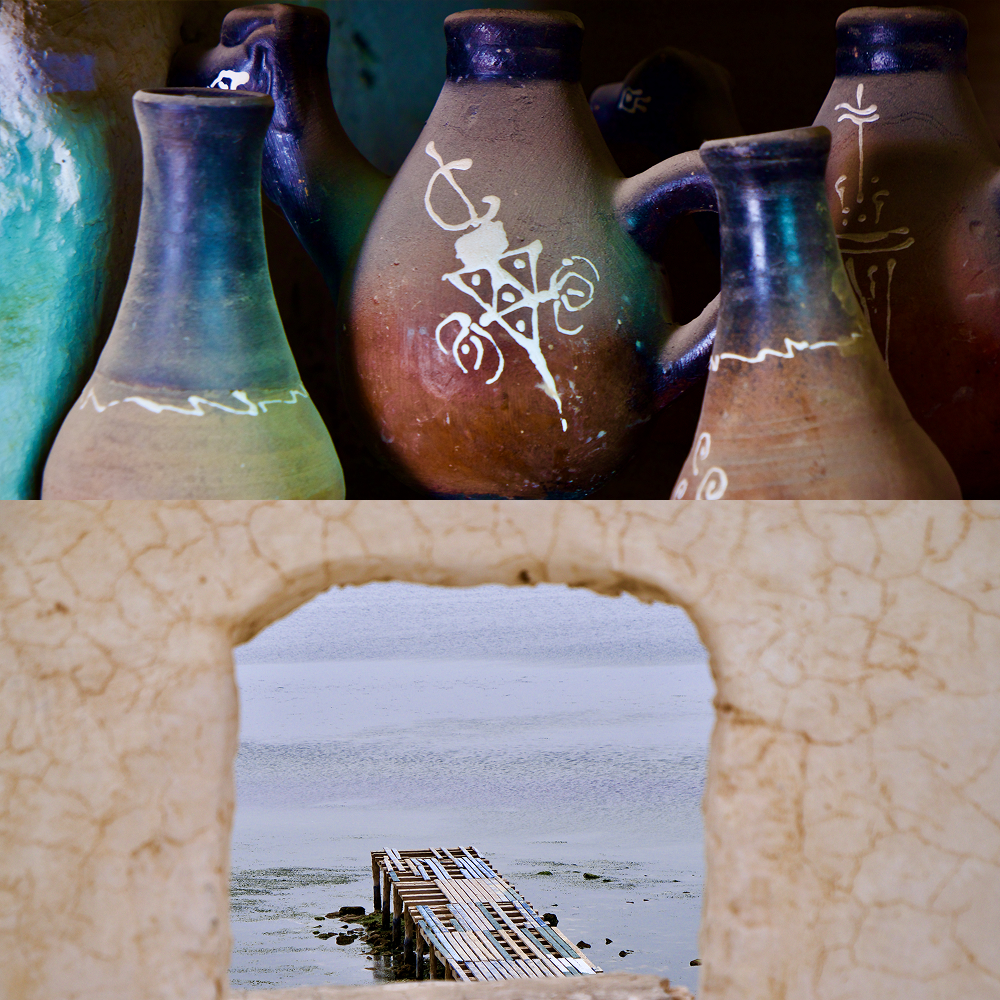
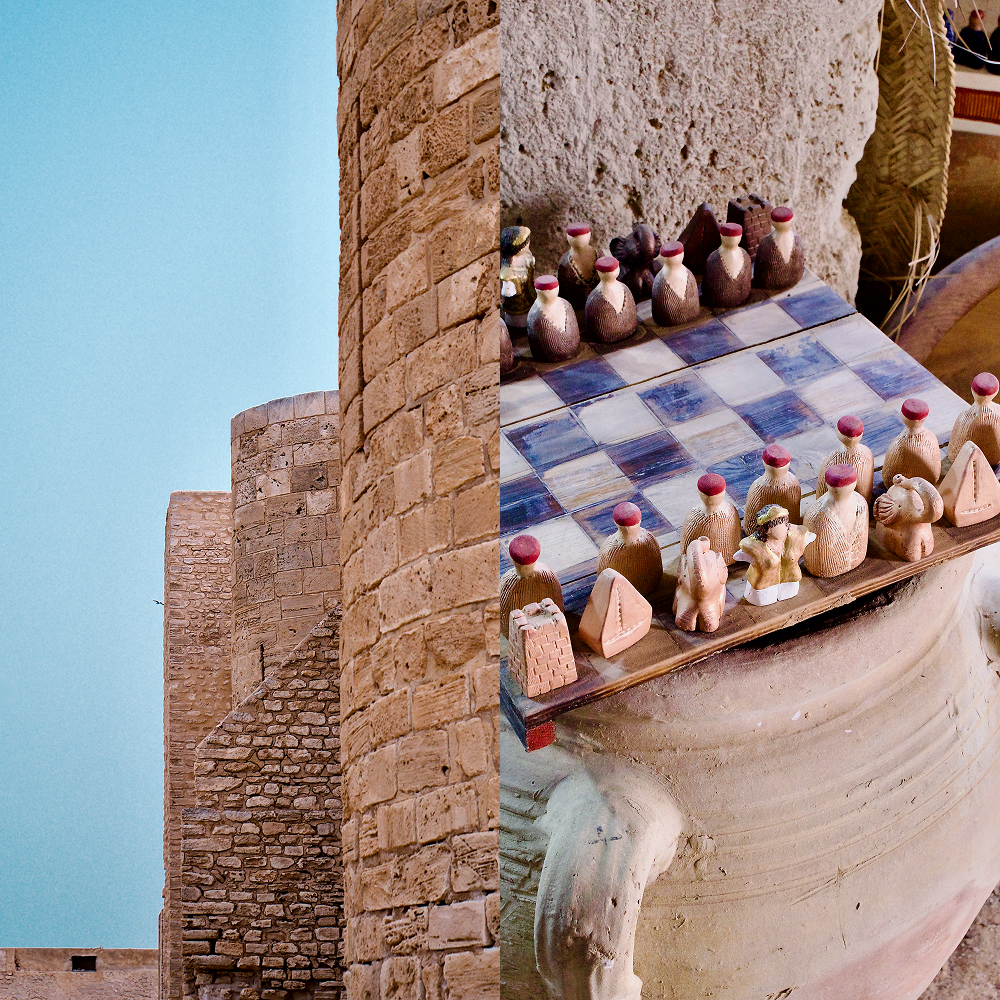
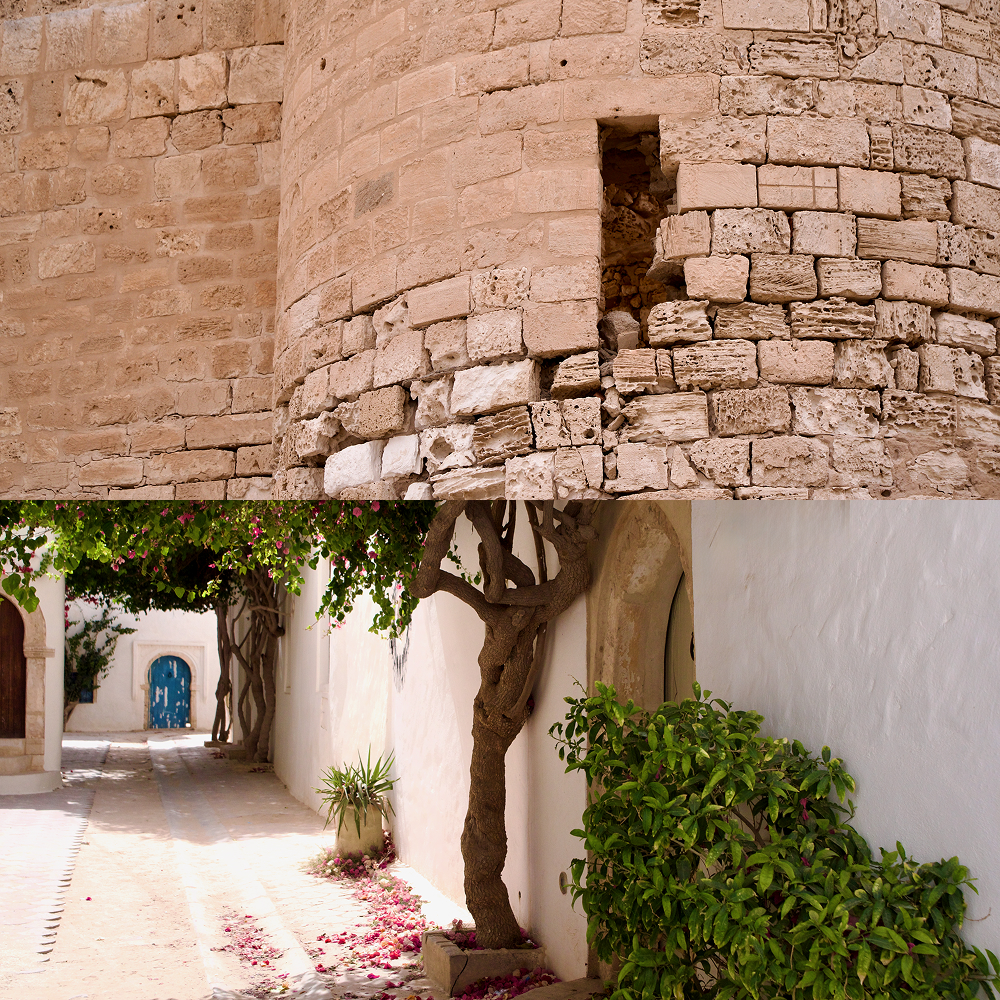
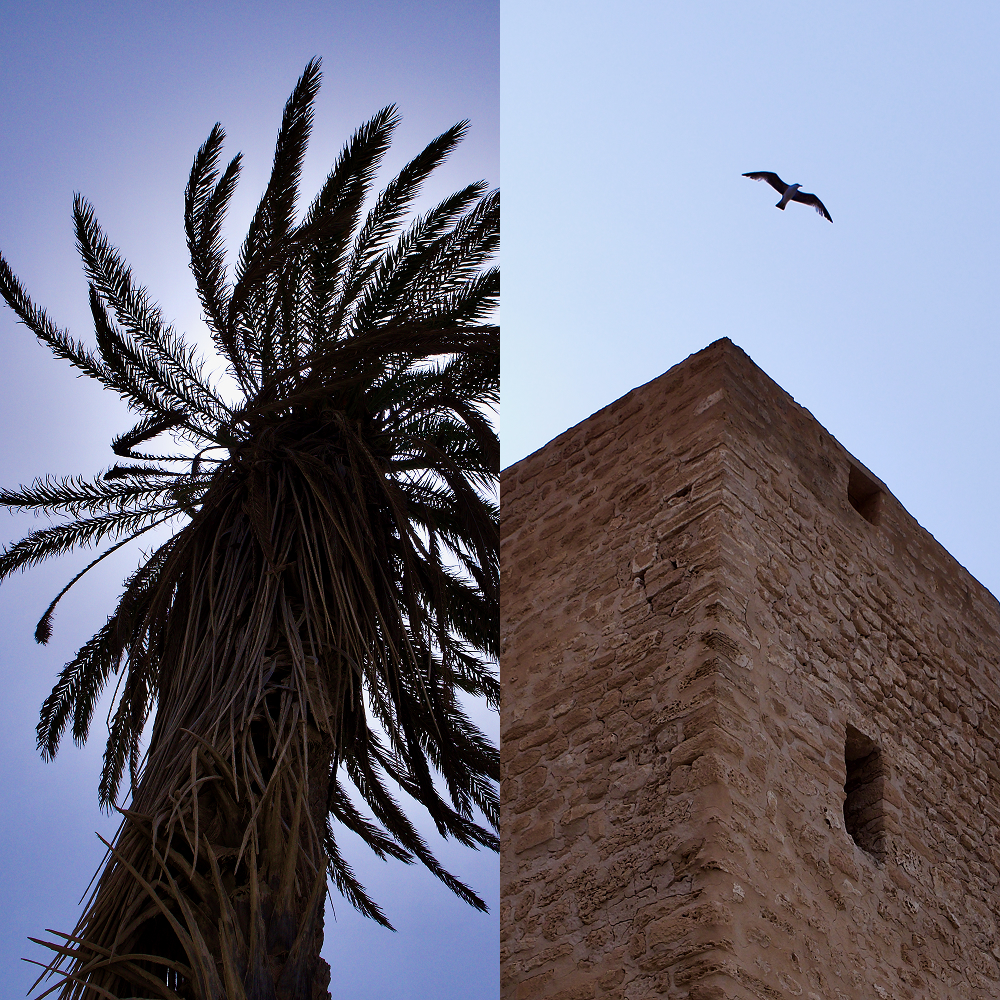
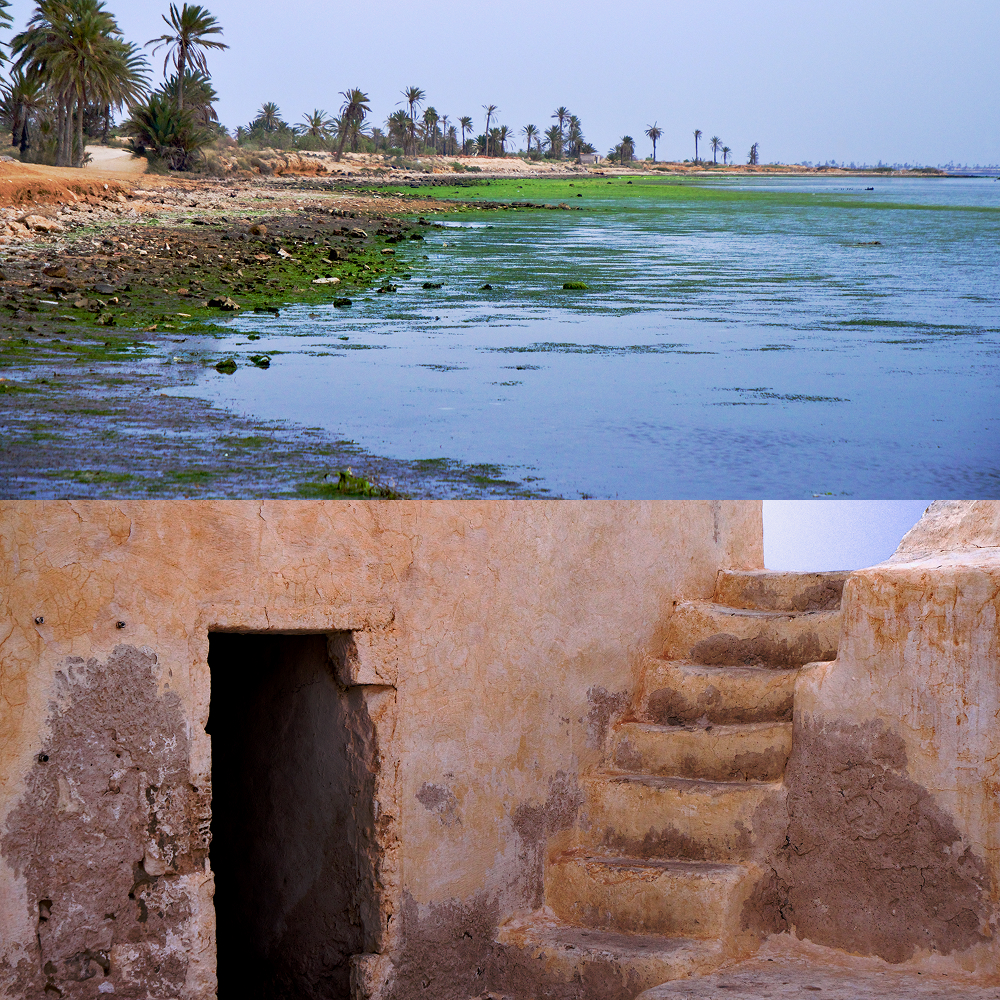
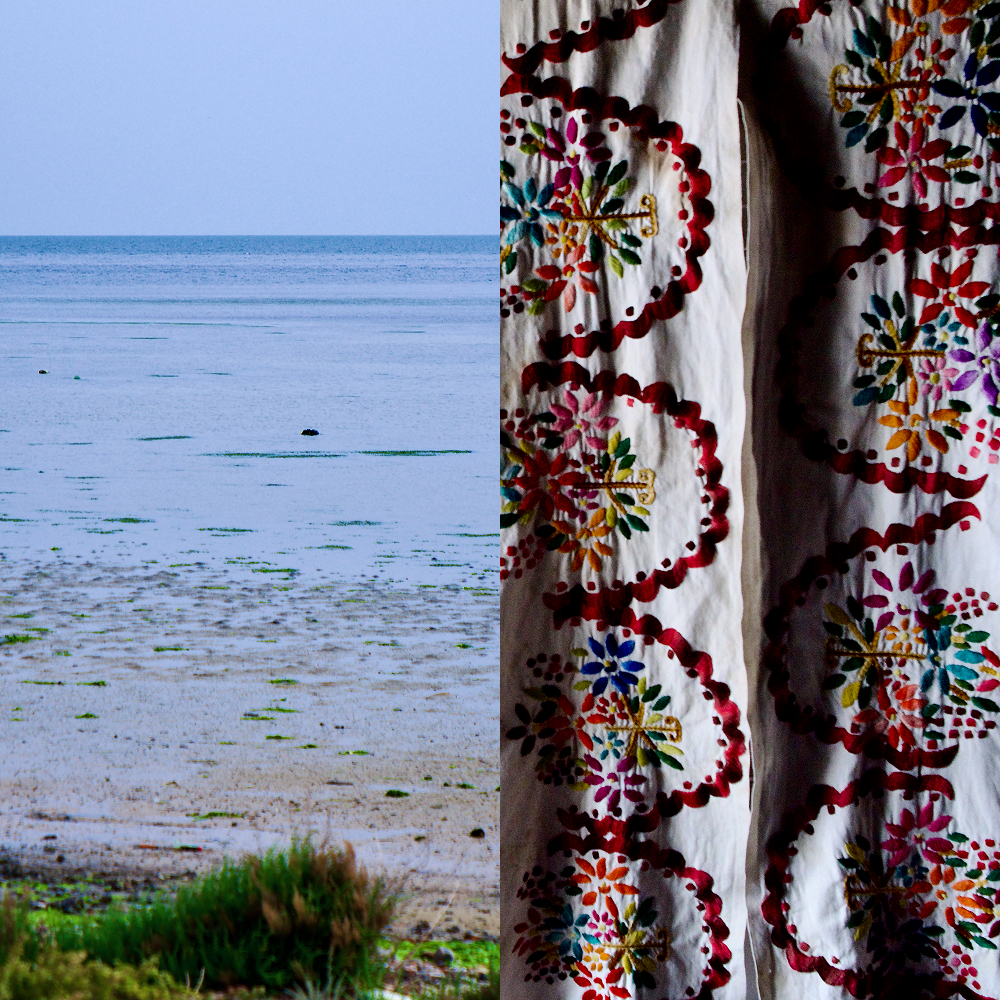
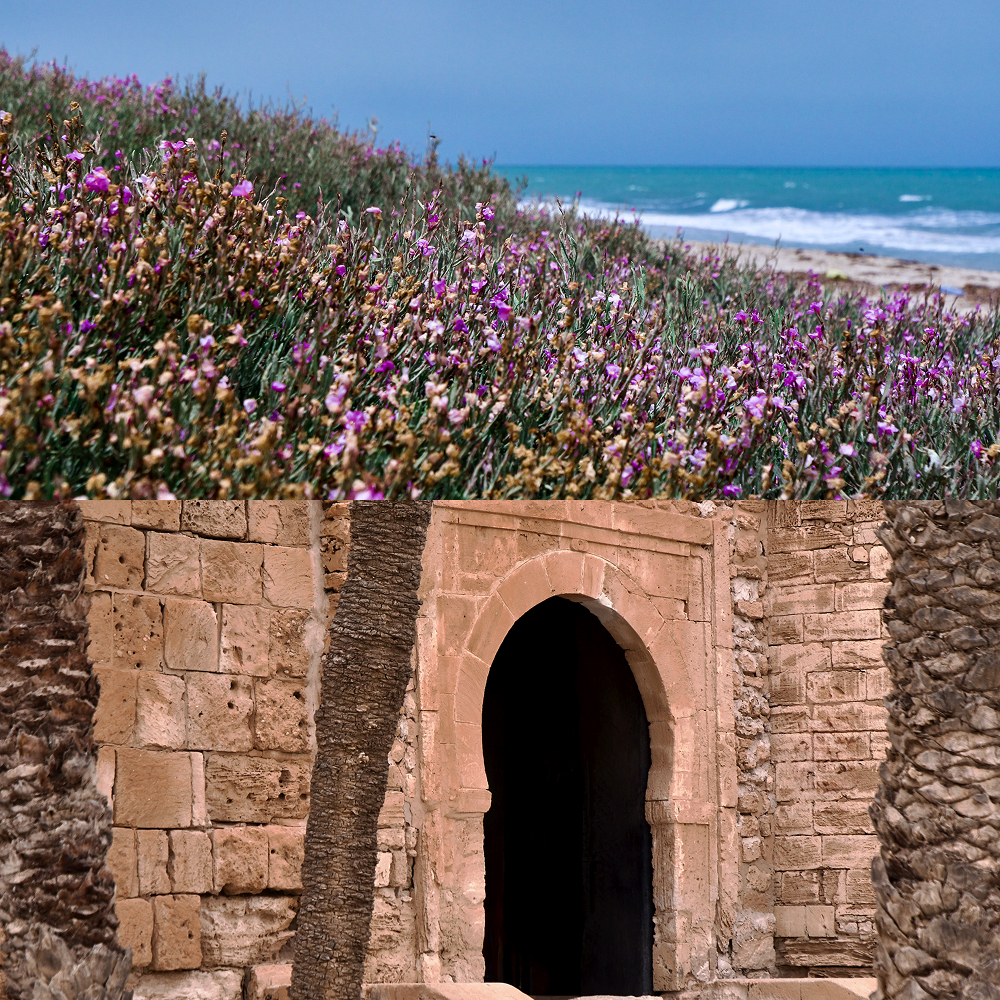
This fragrance is inspired by a formidable heroine, Dihya. It captures her battle against the invasion of ancient Numidian lands in what is now the Maghreb region. Dihya was an Amazigh warrior queen who resisted the Umayyad conquest of North Africa.
Each ingredient is inspired by her journey from the Aurès Mountains to the Mediterranean coastline, where she fought to defend indigenous lands. In the culture she represents, women have long held esteemed positions as leaders and guardians of their heritage, passing an abiding strength down through generations.
Notes (from top to bottom): Seaweed - Fig - Jasmine - Musk - Cedar - Leather
Find nearest shop
21% of profits are donated to:
Three different organisations, all celebrating Amazigh culture across North Africa. They are based in Morocco, Algeria and Tunisia respectively: La Voix de la Femme Amazighe, the Musée National des Arts et Traditions Populaires, and Tamaguit.
Each organisation works to preserve and promote Amazigh culture, while supporting freedom and self expression for Amazigh people. Their work ranges from cultural preservation and public education to the advancement of social and economic independence.
Scroll to the right
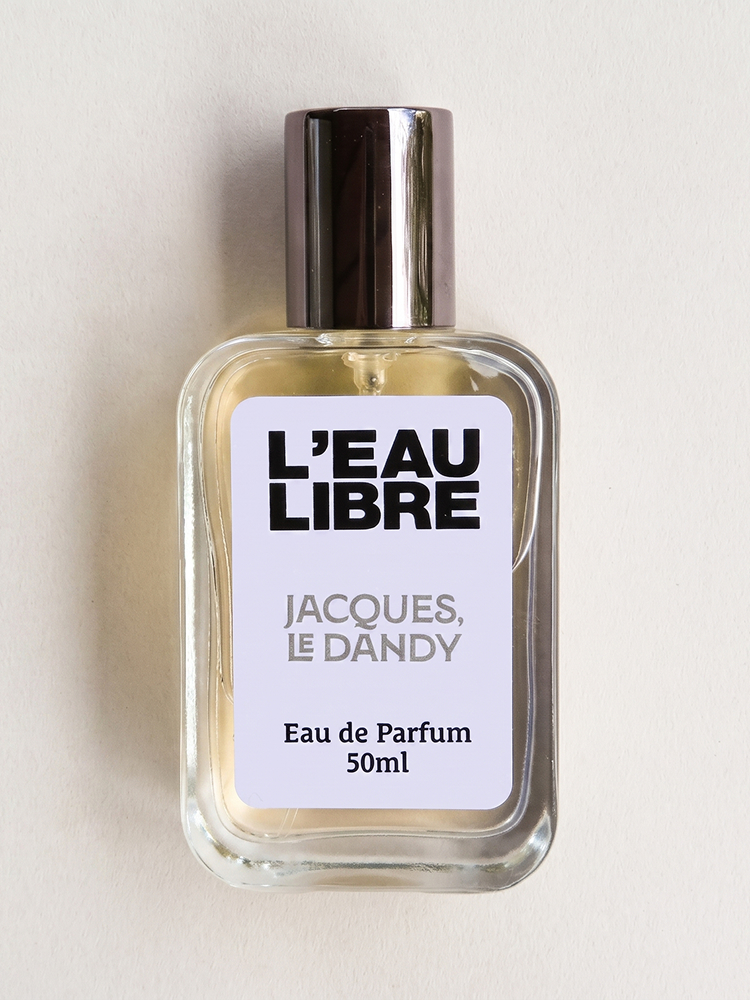
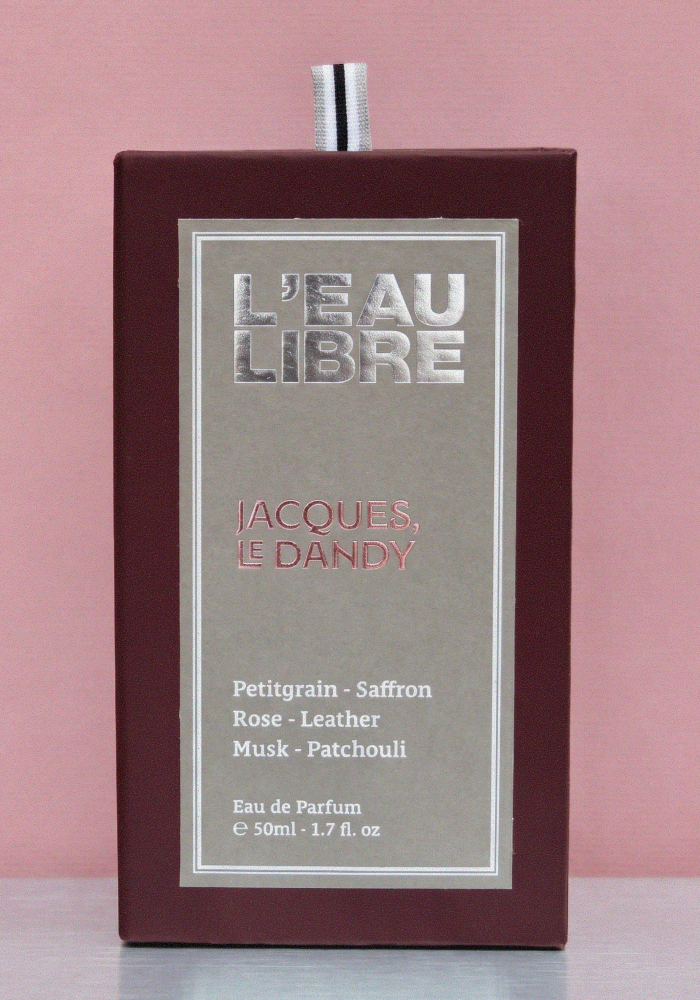
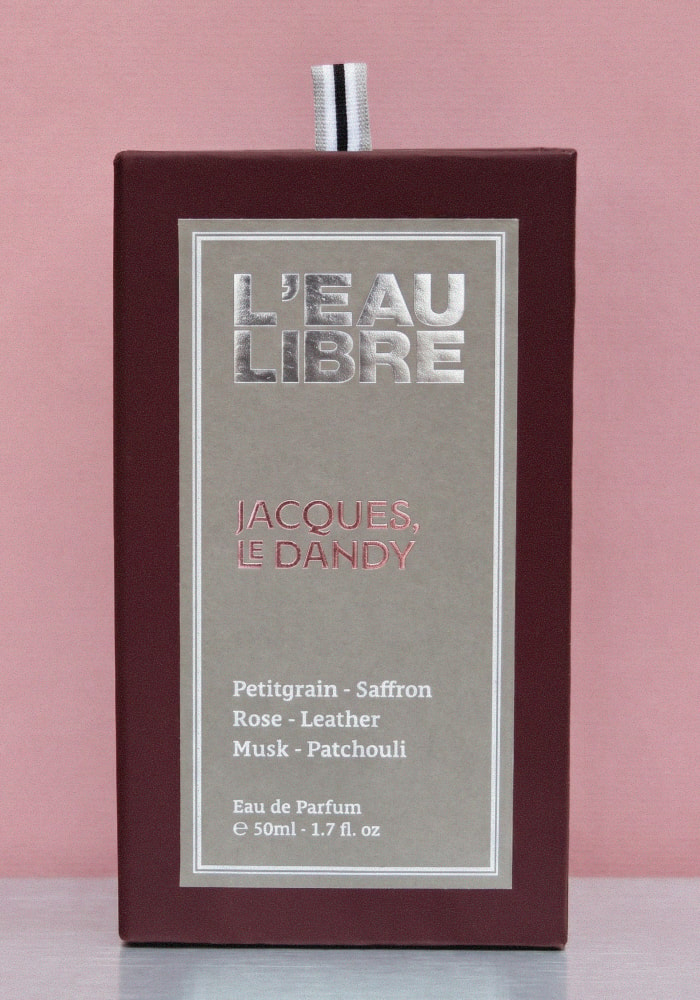
Jacques, Le Dandy
Unbottles: Aesthetics, hedonism, and eccentricity
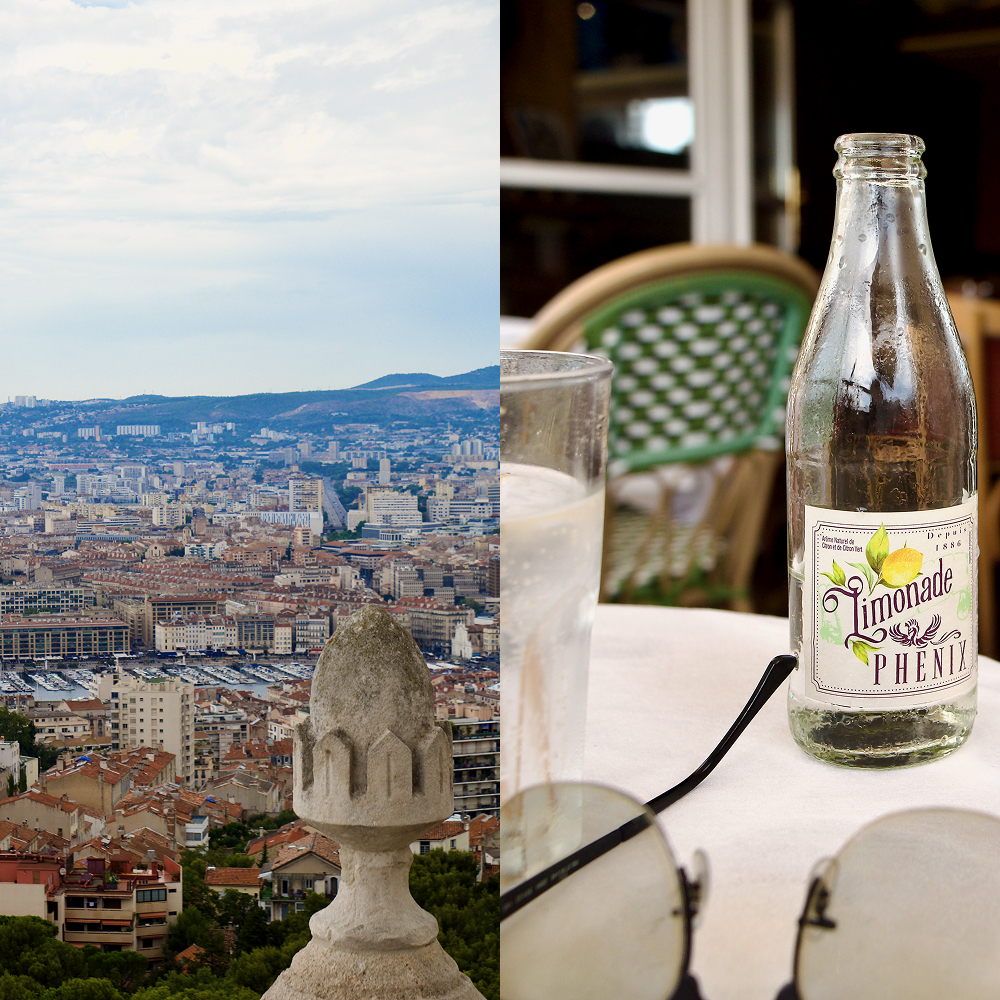
This fragrance is inspired by a magnetic socialite, Jacques. It captures his struggle against the boring, coquettish lives of the old European aristocracy. Each ingredient is inspired by his quest away from the mundane and towards desire, extravagance, and nihilism through intense partying.
The ingredients also reference a dandy’s recurring attraction to Orientalism and to Paris, the metropolitan capital of art and beauty. He embodies the 1970s and 80s, as well as the celebration of queerness and opulent fashion. He passed away from complications related to AIDS.
Notes (from top to bottom): Petitgrain - Saffron - Rose - Leather - Musk - Patchouli
Find nearest shop
21% of profits are donated to:
Three organisations uplifting queer lives, celebrating culture, and raising HIV awareness: the Elton John AIDS Foundation, My.Kali Magazine, and Elska Magazine.
The Elton John AIDS Foundation directs support to communities where it is needed most. It funds critical programmes focused on HIV prevention, testing, treatment, and care, while actively challenging LGBTQI+ stigma and discrimination.
My.Kali Magazine, a queer-feminist publication from and for the Arabic-speaking region and diaspora, and Elska Magazine both make space for a non-commercial gay gaze. They amplify forms of cultural liberation that exist beyond dominant white Western discourse.

Fragrances
L’Eau Libre’s debut collection is about Jacques and Dihya, and the many genders and complexities of otherness they embody. Our masculine portrait is an homage to the lifestyle of the dandy. A vain meditation on how to carry oneself as a man. Our feminine portrait is an ode to the relentless stamina of women who lead.
One could also read the complex layers of colonialism and patriarchal oppression through the pairing of a man and woman on opposing sides of the Mediterranean Sea. Is this the ironic beauty of grappling with contemporary hegemonies? In rebelling, are you campaigning for a new reality, or merely unmasking an inescapable hypocrisy?
Scroll to the right
Dihya, La Guerrière
Unbottles: Independence, foresight, and tenacity
This fragrance is inspired by a formidable heroine, Dihya. It captures her battle against the invasion of ancient Numidian lands in what is now the Maghreb region. Dihya was an Amazigh warrior queen who resisted the Umayyad conquest of North Africa.
Each ingredient is inspired by her journey from the Aurès Mountains to the Mediterranean coastline, where she fought to defend indigenous lands. In the culture she represents, women have long held esteemed positions as leaders and guardians of their heritage, passing an abiding strength down through generations.
Notes (from top to bottom): Seaweed - Fig - Jasmine - Musk - Cedar - Leather
Find nearest shop
21% of profits are donated to:
Three different organisations, all celebrating Amazigh culture across North Africa. They are based in Morocco, Algeria and Tunisia respectively: La Voix de la Femme Amazighe, the Musée National des Arts et Traditions Populaires, and Tamaguit.
Each organisation works to preserve and promote Amazigh culture, while supporting freedom and self expression for Amazigh people. Their work ranges from cultural preservation and public education to the advancement of social and economic independence.
Scroll to the right
Jacques, Le Dandy
Unbottles: Aesthetics, hedonism, and eccentricity
This fragrance is inspired by a magnetic socialite, Jacques. It captures his struggle against the boring, coquettish lives of the old European aristocracy. Each ingredient is inspired by his quest away from the mundane and towards desire, extravagance, and nihilism through intense partying.
The ingredients also reference a dandy’s recurring attraction to Orientalism and to Paris, the metropolitan capital of art and beauty. He embodies the 1970s and 80s, as well as the celebration of queerness and opulent fashion. He passed away from complications related to AIDS.
Notes (from top to bottom): Petitgrain - Saffron - Rose - Leather - Musk - Patchouli
Find nearest shop
21% of profits are donated to:
Three organisations uplifting queer lives, celebrating culture, and raising HIV awareness: the Elton John AIDS Foundation, My.Kali Magazine, and Elska Magazine.
The Elton John AIDS Foundation directs support to communities where it is needed most. It funds critical programmes focused on HIV prevention, testing, treatment, and care, while actively challenging LGBTQI+ stigma and discrimination.
My.Kali Magazine, a queer-feminist publication from and for the Arabic-speaking region and diaspora, and Elska Magazine both make space for a non-commercial gay gaze. They amplify forms of cultural liberation that exist beyond dominant white Western discourse.